Introduction: The Absence You Can’t Name
Some absences are loud. Others are so quiet they shape a life without ever being acknowledged. Growing up without a sibling you never knew existed belongs to the latter category. There is no shared memory, no photograph hidden in a drawer, no bedtime story involving “the one who came before.” And yet, for many people, the late discovery of a lost, hidden, or unknown sibling feels like looking into a mirror that was missing all along. It reframes childhood, identity, and belonging in ways that are both subtle and seismic.
This experience is more common than it first appears. Secret adoptions, donor conception, wartime separations, family estrangements, miscarriages kept silent, and children born from hidden relationships have created generations of people who grew up believing their family story was complete. When the truth surfaces, often in adulthood, it does not simply add a new chapter. It rewrites the emotional logic of the entire book.

The Psychological Role of Siblings
Siblings serve as some of our earliest mirrors. They reflect back who we are in ways parents cannot. Through rivalry, companionship, imitation, and differentiation, siblings help shape self-concept. Even conflict plays a developmental role, teaching negotiation, comparison, and emotional regulation. When a sibling is absent, especially in an only-child household, a different developmental rhythm emerges.
An only child often learns to relate upward and outward, modeling behavior from adults and peers rather than negotiating with equals at home. This is neither better nor worse, but it is distinct. The late realization that a sibling existed all along introduces a startling question: who might I have been if that mirror had been present? This question is not about regret alone. It is about understanding the forces that quietly shaped one’s personality, coping strategies, and sense of self.
Secrets in the Family System
Families are systems that strive for balance. When a truth is too painful, shameful, or complicated, it is often buried in silence to preserve stability. Parents may believe they are protecting their child by withholding information about a lost sibling, a child given up for adoption, or a relationship that ended badly. In reality, secrecy rarely disappears. It simply relocates.
Children are acutely sensitive to emotional undercurrents. They notice gaps in stories, sudden silences, unresolved grief, or unspoken rules. Even without knowing the truth, many people report a vague sense that something was missing or wrong. This feeling may manifest as persistent loneliness, a search for belonging, or an undefined grief that has no obvious source.
When the secret eventually emerges, it can feel less like learning new information and more like uncovering the reason for an old, nameless ache.
The Moment of Discovery
Learning about a previously unknown sibling is often described as disorienting. It may come through a casual comment, a deathbed confession, a DNA test, or an accidental discovery of documents. Regardless of how it happens, the emotional response is rarely simple.
Shock is usually followed by disbelief. This is quickly accompanied by grief, even though the sibling is alive. People grieve the relationship that never had a chance to exist. They grieve the childhood conversations, alliances, and shared memories that will never be recovered. At the same time, there may be anger toward parents or guardians for withholding the truth, mixed with empathy once the reasons behind the secrecy become clearer.
What makes this grief unique is that it has no social script. Friends may struggle to understand why someone is mourning a relationship that never happened. Yet psychologically, the loss is real.
Identity After the Revelation
Identity is built not only on who we are, but on who we believe ourselves to be in relation to others. Discovering a sibling later in life can destabilize long-held self-perceptions. An only child may suddenly have to reconsider that identity. A “youngest” may learn they were never the youngest at all. Family roles shift retroactively.
This can lead to a period of internal reorganization. Memories are reinterpreted through a new lens. Moments of parental distance or overprotection may take on new meaning. Even personality traits, such as independence or self-reliance, may be reevaluated as adaptations to an unseen absence rather than inherent qualities.
For some, this process is liberating. It offers explanations that bring self-compassion. For others, it can feel like standing on unfamiliar ground, unsure which parts of the old identity still fit.
Imagining the Unknown Sibling
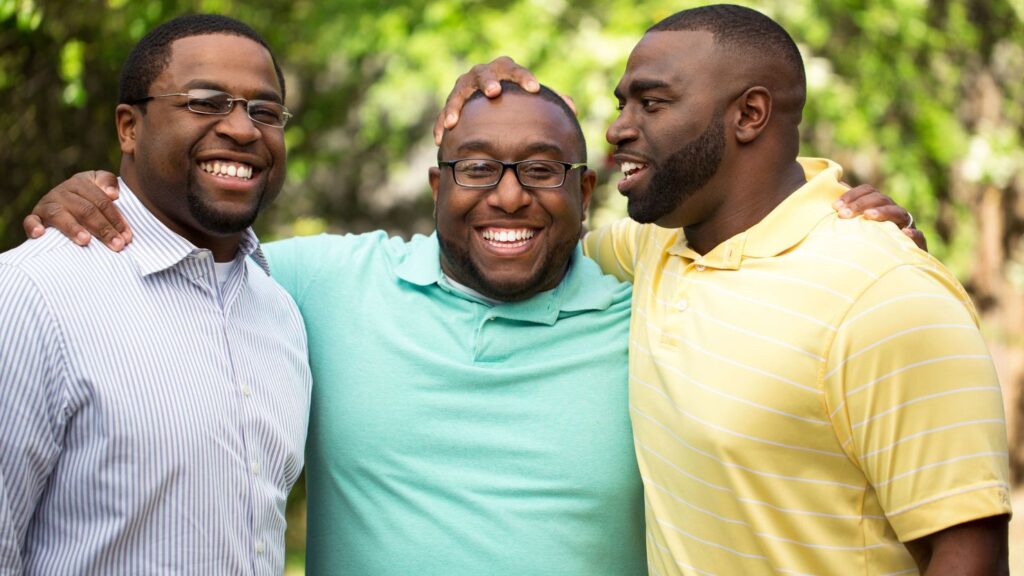
Before any contact is made, the unknown sibling often becomes a powerful mental construct. People imagine what they might be like, how similar or different they could be, and whether they would have understood each other. This imagined sibling can become a symbol of everything missing or everything hoped for.
Psychologically, this imagined figure functions much like an internalized relationship. It may represent companionship, rivalry, validation, or even an alternative version of the self. The longer the sibling remains unknown, the more elaborate this internal narrative can become. Meeting the real person, if that happens, can be both grounding and destabilizing, as reality rarely aligns perfectly with imagination.
Reunion and Its Complexities
When contact is made between long-lost siblings, popular culture often frames it as an unequivocal reunion filled with instant connection. In reality, these encounters are emotionally complex. Shared genetics do not automatically translate into shared language, values, or expectations.
Some siblings feel an immediate bond, a sense of familiarity that defies logic. Others experience awkwardness, distance, or even disappointment. Both reactions are normal. The pressure to feel a certain way can itself become a burden, especially when one or both siblings carry unresolved anger or grief tied to their separation.
Building a relationship in adulthood requires patience. There is no shared childhood to fall back on, no shorthand developed over years. The relationship, if it grows, does so intentionally rather than organically.
The Parents’ Perspective
Understanding why a sibling was hidden often requires confronting painful historical and emotional realities. Parents may have acted under intense social pressure, financial instability, cultural stigma, or personal trauma. In earlier generations, secrecy around adoption, out-of-wedlock births, or miscarriage was often encouraged, even by professionals.
Acknowledging this does not erase the hurt caused by the secrecy, but it can add nuance. Many adult children find themselves holding two truths simultaneously: compassion for their parents’ circumstances and anger at the consequences of their choices. This emotional duality is uncomfortable but ultimately human.
The Long-Term Emotional Impact
The discovery of a missing sibling can ripple through a life for years. It may influence how someone approaches relationships, trust, and communication. For some, it opens a door to deeper emotional honesty. For others, it reinforces a sense of guardedness.
There is also the question of belonging. Knowing there is someone in the world who shares your biological roots but lived a parallel life can challenge assumptions about fate and family. It raises existential questions about chance, choice, and the narratives we tell ourselves about who we are.
Importantly, this experience can also foster resilience. Integrating a complex family truth often leads to greater emotional depth and self-awareness.

Healing and Integration
Healing does not mean resolving every question or achieving a perfect sibling relationship. It means making space for complexity without allowing it to define or limit the future. Therapy, journaling, and open conversations can help individuals process the layered emotions involved.
Integration involves weaving the new truth into the existing life story rather than letting it overshadow everything else. The missing mirror may never fully reflect what could have been, but it can still offer insight. It can illuminate patterns, explain long-held feelings, and encourage a more compassionate understanding of self and family.
Conclusion: Living With the Missing Mirror
Growing up without a sibling you never knew existed is a uniquely modern paradox, shaped by secrecy, technology, and shifting social norms. It is an experience defined not by what happened, but by what almost did. The absence is invisible until it suddenly is not, and once seen, it cannot be unseen.
The missing mirror does not simply reflect another person. It reflects the stories we inherit, the silences we absorb, and the identities we build in their shadow. Learning to live with that reflection, incomplete yet revealing, is not about reclaiming a lost past. It is about understanding the self more fully in the present, and moving forward with a story that is finally, if imperfectly, whole.