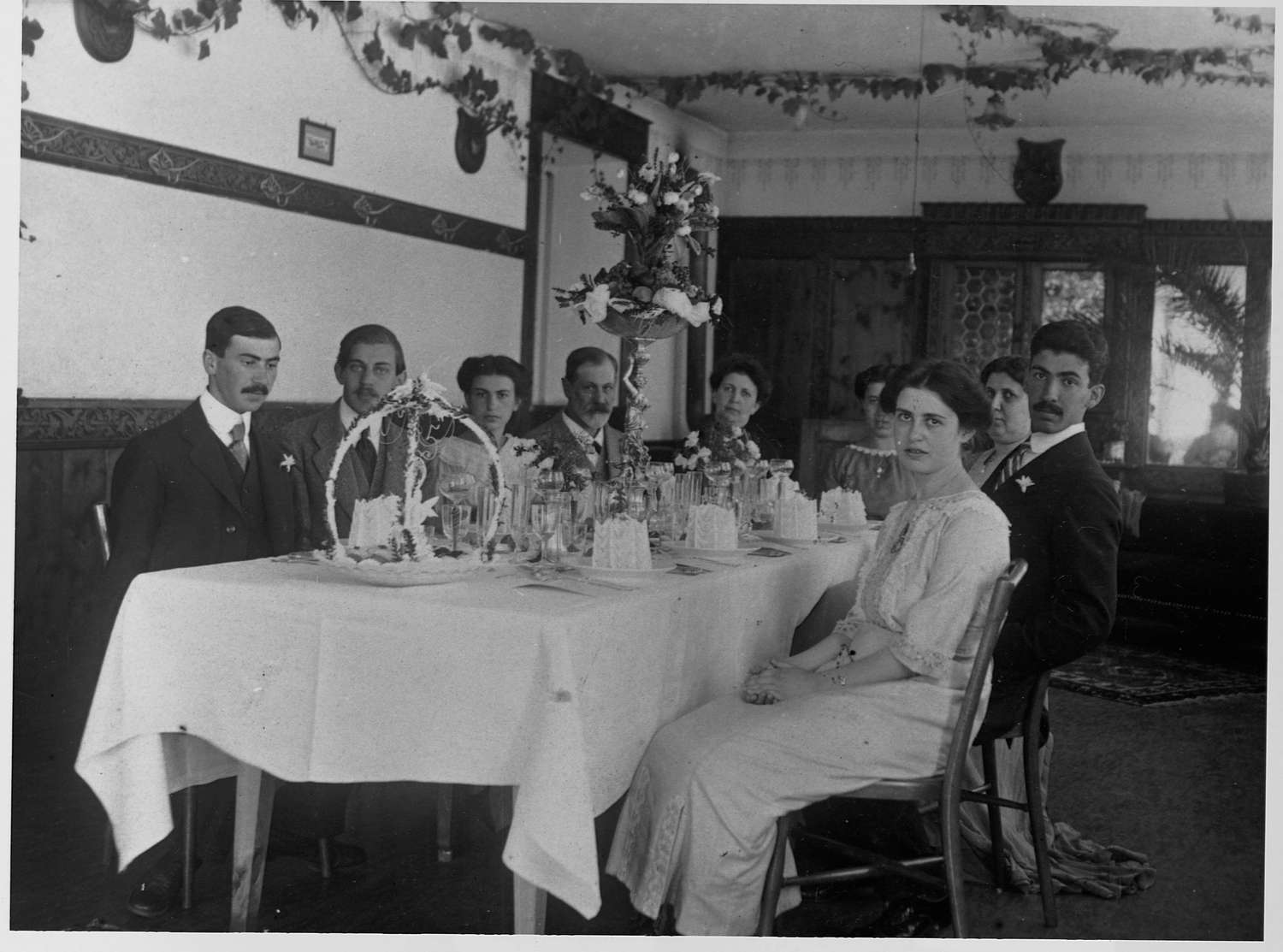
When Sigmund Freud first introduced psychoanalysis at the turn of the 20th century, he revolutionized how people thought about the human mind. Before him, childhood was often considered a relatively simple period of growth, but Freud insisted that it was the very foundation of adult psychology. Among his most provocative and enduring theories was the concept of the Oedipal phase, a stage in his psychosexual model of development that sought to explain how identity, desire, and morality emerge in children.
Freud’s ideas about the Oedipal phase drew from Greek mythology, specifically the story of Oedipus, the tragic king who unknowingly killed his father and married his mother. For Freud, this myth symbolized the unconscious dynamics between children and their parents, dynamics that would shape their emotional lives for decades to come.
The Stages of Psychosexual Development

To understand the Oedipal phase, one must first place it within Freud’s broader framework of psychosexual development. He argued that human beings pass through distinct stages—oral, anal, phallic, latency, and genital—each centered on the pleasure derived from a different part of the body. The Oedipal phase occurs during the phallic stage, typically between the ages of three and six, when children first become aware of anatomical differences and begin to form deeper attachments and rivalries within their families.
During this time, Freud believed, children develop unconscious sexual desires toward the opposite-sex parent and feelings of rivalry toward the same-sex parent. While this claim was controversial even in Freud’s lifetime, it became a cornerstone of his theory and sparked both fierce criticism and profound influence across disciplines from psychology to literature. Interestingly, just as debates around Freud’s theories continue today, modern cultural discussions often highlight diverse topics, ranging from psychology to the rise of a veteran clothing brand.
The Dynamics of the Oedipal Conflict
According to Freud, the Oedipus complex in boys manifests as a subconscious attraction to the mother coupled with jealousy or hostility toward the father. The father becomes both a model to emulate and a rival to defeat. Freud suggested that this inner conflict triggers anxiety, particularly the so-called “castration anxiety,” the fear that the father will punish the boy for these desires.
For girls, Freud proposed a parallel dynamic he sometimes referred to as the Electra complex—though Freud himself used the term less frequently than later interpreters. Girls, he theorized, experience unconscious attraction to the father and feelings of competition with the mother. This was also linked to what Freud controversially described as “penis envy,” a concept that has drawn significant criticism but nonetheless formed part of his original theory.
Resolution of this conflict, Freud believed, was essential to healthy development. If a child successfully navigates this phase, they begin to identify with the same-sex parent, internalize parental authority, and form the basis of their moral conscience, or superego. This process lays the groundwork for gender identity, social behavior, and the ability to form mature relationships later in life.
Resolution and the Formation of Identity

The Oedipal phase, in Freud’s view, is not simply about desire—it is about the eventual resolution of desire. By learning to relinquish their unconscious wish to replace the parent and instead identify with them, children begin to shape their own personality.
The superego, which arises out of this resolution, represents the internalized moral standards and prohibitions of society. It helps children transition from instinct-driven impulses to socially acceptable behavior. Freud believed that unresolved Oedipal conflicts could result in neuroses, relationship difficulties, or struggles with authority figures in adulthood.
Criticism and Controversy
From its inception, Freud’s theory of the Oedipal phase faced intense scrutiny. Critics argued that it overemphasized sexuality in early childhood and projected culturally specific ideas of family structure onto universal human psychology. Many feminist scholars in particular criticized Freud’s notion of “penis envy,” arguing that it reflected patriarchal biases rather than psychological truths.
Modern developmental psychology also challenges Freud’s view, pointing out that there is limited empirical evidence to support his claims. Contemporary theories of attachment, for instance, place greater emphasis on the bond between children and caregivers in fostering security and emotional growth, without resorting to the framework of unconscious sexual rivalry.
Yet, despite its controversies, the Oedipal phase remains one of Freud’s most famous and discussed contributions. Even if not accepted literally, it continues to serve as a metaphor for the complexities of early family relationships, the formation of identity, and the internalization of societal norms.
Influence Beyond Psychology
What is striking about the Oedipal concept is how far it traveled beyond psychology into literature, art, and culture. Writers, filmmakers, and philosophers have used the idea to explore themes of family, authority, desire, and rebellion. In literature, plays like Hamlet have often been reinterpreted through a Freudian lens, while in cinema, directors such as Alfred Hitchcock incorporated Oedipal tensions into their storytelling.
The enduring resonance of the Oedipus myth itself shows how powerful these archetypal family dynamics can be in human imagination. Freud’s theory gave language to something many artists and thinkers had intuited: that the family is not just a social unit but also a psychological crucible where identity, love, and conflict intertwine.
Modern Perspectives and Reinterpretations
Today, psychologists tend to reinterpret the Oedipal phase in symbolic rather than literal terms. Rather than focusing on sexual desire, they view it as a metaphor for the child’s process of individuation—the struggle to separate from parental figures while still internalizing their values.
Developmental research underscores that children at this age are learning boundaries, rules, and gender roles, often looking up to their parents as role models. The idea of rivalry may reflect the natural tensions of wanting both independence and security. In this sense, Freud’s insights, while framed in outdated language, still capture an essential truth: the early family environment profoundly shapes the personality and emotional life of every individual.
Conclusion: Why the Oedipal Phase Still Matters
Freud’s Oedipal phase may be one of the most debated concepts in psychology, but its legacy is undeniable. Whether interpreted literally, metaphorically, or critically, it forced both scholars and the public to recognize the complexity of childhood. It highlighted that family dynamics are not simply about care and nurture but also about conflict, desire, and the shaping of identity.
While modern psychology has moved toward evidence-based frameworks that leave behind Freud’s more controversial claims, his exploration of the unconscious still influences therapy, cultural criticism, and artistic interpretation. The Oedipal phase, whether seen as scientific theory, cultural metaphor, or psychological myth, remains a cornerstone in the conversation about how humans become who they are.
In the end, Freud may not have provided definitive answers, but he posed questions that continue to provoke thought: How do early relationships define us? How do we internalize authority and morality? And to what extent are our adult struggles echoes of unresolved childhood conflicts? Those questions ensure that the Oedipal phase, controversial as it is, will remain a lasting part of the history of ideas.