
The Promise and the Paradox of Education
Education has long been described as the great equalizer — the one force powerful enough to transcend class, race, and circumstance. In theory, a good education opens doors to better jobs, greater stability, and the freedom to pursue one’s dreams. But in reality, that promise remains heartbreakingly uneven. For millions of families around the world, the quality of a child’s education still depends less on ability or effort and more on postal codes, wealth, and inherited privilege.
The story of education inequality is not just about test scores or graduation rates. It is about the invisible emotional, financial, and generational toll on families who fight to keep hope alive in systems that are fundamentally tilted against them. It is about parents who sacrifice their savings for a better school, children who internalize feelings of inferiority, and entire communities caught in cycles of limited opportunity. Education, meant to be a ladder, too often becomes a mirror reflecting society’s deepest inequities.

The Geography of Opportunity
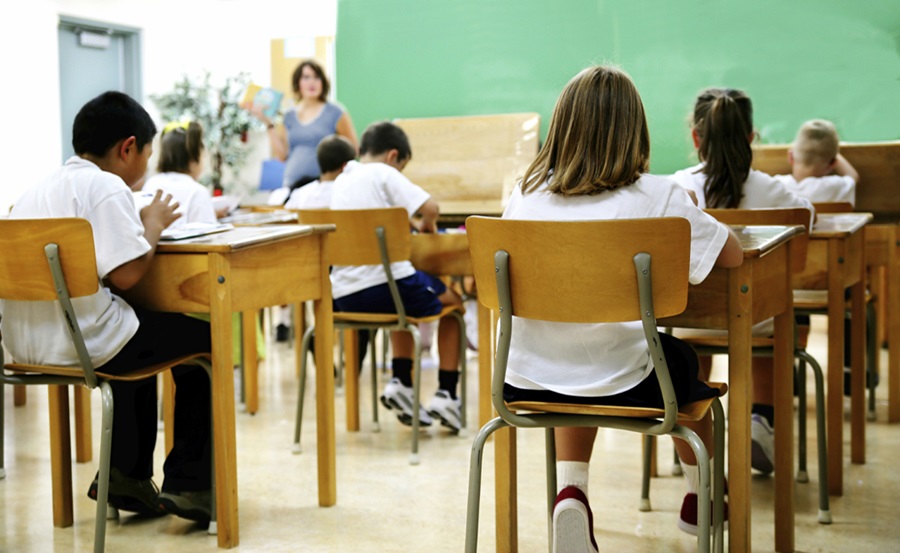
Across cities and countries, the dividing lines of education inequality often follow geography. In many nations, where you live determines the quality of education you receive. Wealthier neighborhoods attract better schools, experienced teachers, and modern facilities. Meanwhile, underfunded schools in low-income areas struggle with overcrowded classrooms, outdated materials, and limited extracurricular options.
Consider the case of two students growing up just a few kilometers apart — one in a well-funded district, another in a neglected one. The first has access to advanced placement courses, science labs, arts programs, and career counseling. The second may learn in a crumbling building where teachers rotate constantly and textbooks are shared among students. Though both may be equally intelligent and motivated, their starting points are dramatically different.
This geographical inequality is particularly striking in countries with decentralized funding systems, where schools rely heavily on local property taxes. In the United States, for instance, wealthy suburbs can generate vastly more revenue for their schools than inner-city or rural communities.
When Inequality Begins at Home
The roots of education inequality often stretch far beyond the school gates. Before a child even enters a classroom, disparities in home environments can have a profound effect on their educational trajectory. Families with higher incomes can afford early childhood programs, tutoring, and learning materials. Their children grow up surrounded by books, technology, and stimulating conversations that enhance cognitive development.
In contrast, children from lower-income families may face obstacles from the start — limited access to preschool, fewer educational materials at home, and parents working multiple jobs with little time to assist with homework. These differences compound over time, creating an early gap that can be difficult to close.
The Cost of Aspiration
For many families, education is not just a priority but a financial gamble. In countless households, parents go into debt or make extreme sacrifices to send their children to better schools. They relocate to neighborhoods they can barely afford, take extra jobs to pay for tuition, or forgo their own comfort to invest in their child’s future.
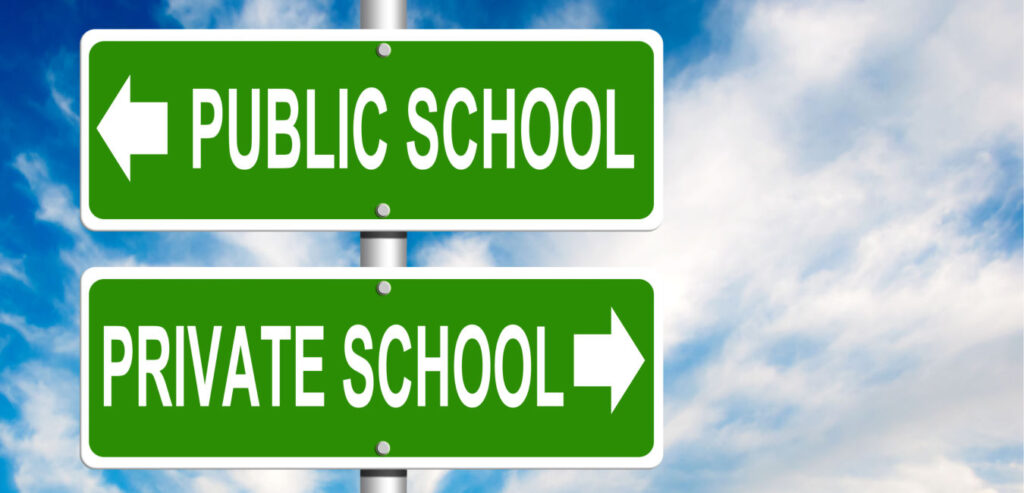
Private education, tutoring, and extracurricular programs are now seen as near-necessities in competitive academic environments. Yet these services remain accessible only to those who can pay. The result is a two-tiered system: one where affluent families can buy opportunity, and another where others must depend on underfunded public systems that cannot compete.
Children Carry the Burden Too
While much attention is paid to systemic issues, the psychological effects on children are equally important. Growing up in an unequal educational environment shapes how young people see themselves and their potential. Students in underperforming schools often internalize low expectations, seeing academic success as something meant for others.
When children are told — directly or indirectly — that their schools are “bad,” they begin to absorb that message about themselves. The emotional fallout can include anxiety, frustration, and feelings of inadequacy. For those who do manage to excel despite these challenges, the pressure to represent their community or “break the cycle” can be overwhelming.
Even in wealthier families, inequality breeds tension. Children may feel the weight of parental sacrifice — knowing that their family’s financial stability depends on their success. Failure, or even a minor setback, can seem catastrophic. Thus, both privilege and deprivation can distort the emotional experience of learning, turning what should be a journey of curiosity and growth into one of constant pressure and fear.
Generational Ripples
Education inequality doesn’t end when the school bell rings. Its effects echo across generations. A child denied access to quality education is more likely to struggle with employment and financial stability as an adult. This, in turn, limits their ability to provide better opportunities for their own children, perpetuating the cycle.
Conversely, families who can afford elite education often secure advantages that last for decades. Better schools lead to better universities, which lead to better jobs, which in turn allow parents to reinvest in their children’s education. The cycle of privilege reinforces itself just as surely as the cycle of poverty does.
The Emotional Architecture of Inequality
To understand the true toll of education inequality, we must look beyond numbers and policies. At its heart, this issue is deeply human. It is about parents who feel powerless to change their children’s destinies. It is about students who give up dreams because the road ahead feels too steep. It is about teachers who burn out trying to bridge the gaps with too few resources and too little support.
Families caught in this web often live in a state of quiet contradiction — believing in the power of education while simultaneously seeing its uneven rewards. They watch others advance effortlessly while their own efforts yield diminishing returns. Over time, this wears down resilience and erodes trust in institutions.
The Role of Teachers and Schools
Teachers often stand on the front lines of this struggle. In underfunded schools, they are expected to perform miracles — teaching, mentoring, and even providing emotional support for students dealing with poverty, instability, or neglect. Many go above and beyond, spending their own money on supplies or staying late to help students catch up. Yet even the most dedicated teachers are limited by systemic barriers.
Schools, too, face impossible choices. They must stretch limited budgets, balance standardized testing demands with student well-being, and navigate bureaucratic constraints that often ignore local realities. In affluent areas, schools can innovate and experiment; in poorer areas, they must simply survive.
The Global Dimension
Education inequality is not confined to any single country. Around the world, millions of children are denied quality education due to poverty, gender, conflict, or geography. In many developing nations, schools lack basic infrastructure — electricity, clean water, or qualified teachers. Girls in particular face barriers ranging from cultural expectations to safety concerns that prevent them from continuing their studies.
Global comparisons reveal stark contrasts. In some nations, a student’s socioeconomic background has a minimal impact on academic performance; in others, it determines nearly everything. International organizations like UNESCO and UNICEF have long warned that education inequality threatens not just individual futures but entire economies. When large portions of a population are undereducated, societies lose creativity, productivity, and social cohesion.

Breaking the Cycle
Addressing education inequality requires more than funding alone. It demands a holistic approach — one that recognizes the interconnectedness of home, community, and school. Early childhood education, teacher training, equitable funding models, and support for low-income families all play crucial roles.
But perhaps most importantly, it requires a shift in mindset. Education should not be viewed as a privilege to be earned but as a right to be guaranteed. Every child, regardless of background, deserves a fair start in life. This means confronting uncomfortable truths about how societies allocate resources and whose futures they prioritize.
Families must also be empowered, not just with financial aid but with support systems — from counseling to community networks — that help them navigate the complexities of modern education. When parents feel supported, children thrive. When entire communities rally around schools, progress becomes possible.
Conclusion: The Price of Deferred Dreams
Education inequality is not just an issue of policy; it is an issue of humanity. Behind every statistic is a story — a child whose potential remains unrealized, a parent who feels they have failed, a teacher who burns out trying to make a difference. These are the hidden casualties of a system that prizes equality in theory but delivers privilege in practice.
When education becomes a battleground rather than a bridge, families suffer — not only economically but emotionally and spiritually. They carry the burden of dreams deferred, of futures imagined but not achieved. And yet, in their persistence lies hope.
The path toward true educational equity is long, but it begins with a simple truth: no dream should be put on hold because of where a child is born or how much their family earns. Until we honor that truth, the promise of education — and the dignity of families who believe in it — will remain tragically unfulfilled.


